

The original ride food
A banana is real ride fuel. One medium banana carries about 27 grams of carbohydrate, it comes in its own wrapper, and in a lab study it kept trained cyclists going over 75 kilometers just as well as a sports drink. It is not a cramp cure, and it is not the easiest thing to eat at race pace. For a long, steady ride, it is hard to beat.
Bananas were ride food long before anyone sold a gel. Picture a bunch on the café counter and a rider stuffing two in the back pocket. We still think that rider had it mostly right.
What is actually in one
We pulled these numbers from the USDA's FoodData Central database for a raw banana, scaled to a medium one (7 to 7 7/8 inches, about 118 grams). The percentages use the FDA's current Daily Values.
- Vitamin B6About 0.43 mg, roughly 25 percent of the Daily Value, which is the most impressive number on the list.
- ManganeseAbout 0.32 mg, around 14 percent of the Daily Value.
- Vitamin CAbout 10 mg, around 11 percent of the Daily Value.
- FiberAbout 3 g, around 11 percent of the Daily Value. Keep this one in mind, because it matters on the bike.
- FatWell under half a gram, which is basically none.
The potassium number surprises people. A banana is a good source and 422 mg is a real amount, but it is only about 9 percent of the 4,700 mg Daily Value, so the banana is more famous for potassium than it is loaded with it.
Does it work as well as the stuff in packets?
Researchers at Appalachian State University tested exactly that in 2012. Fourteen trained male cyclists, all experienced road racers, rode two 75 kilometer time trials on their own bikes on indoor trainers. In one they ate bananas, and in the other they drank a 6 percent carbohydrate sports drink, both at the same carbohydrate dose. Their times were essentially the same, about 2.41 hours on bananas and 2.36 hours on the drink, a gap the researchers found was not statistically significant. Blood sugar did not differ either.
A 2015 follow up from the same lab had 20 male athletes ride 75 kilometers on bananas, pears, or just water. They were 5 percent faster on bananas than on water.
One fair note: both studies had ties to Dole. The 2012 paper discloses Dole funding and Dole scientists on the team, and the 2015 paper lists a researcher from the Dole Nutrition Research Laboratory. In both studies every rider did every trial, in random order, which is a solid design, and the result matches what plenty of riders already believed. You should still know who paid for the fruit.
In a 2012 lab study, bananas fueled trained cyclists over 75 km as well as a sports drink.The downside was bloating, most likely from the fiber that comes with the fruit.
The catch is the fiber
In that 2012 study, riders felt more full and more bloated on bananas than on the sports drink. The riders averaged six to seven bananas each over the 75 kilometers, and the researchers said the bloating was probably from the nearly 15 grams of fiber that came with them. A sports drink has essentially none.
That is the real difference between a banana and a gel. The carbohydrate does the same job, but the fiber and the bulk ride along with it, and your stomach has to deal with both. You will never notice on an easy ride, but at threshold or in the heat, you might.
How much you need matters too. The standard sports nutrition guidance, from a 2011 consensus paper in the Journal of Sports Sciences and a 2014 review in Sports Medicine, is 30 to 60 grams of carbohydrate per hour on longer rides, and up to about 90 grams per hour once an effort runs past two and a half hours. The higher rates need a blend of sugars. A medium banana is about 27 grams, so the top of the 60 gram range means a little over two bananas an hour. That is a lot of fruit in a jersey pocket, and a lot of fiber.
What we find interesting is that, according to the USDA data, the sugars in a banana split almost evenly between glucose and fructose. Both papers say that kind of mix is what lets your body use carbohydrate at the higher hourly rates, beyond what glucose alone allows. Bananas had a version of the idea long before the packets did.
About cramps
We need to correct an old version of this post, which said the potassium in bananas can help prevent cramps. The research does not back that up.
A 2012 study in the Journal of Athletic Training had nine men ride hard for an hour in the heat and then eat zero, one, or two servings of banana. Blood potassium barely moved, the changes stayed within normal values, and they took 30 to 60 minutes to show up at all. The author concluded bananas are unlikely to relieve exercise cramps by raising potassium, and the changes come too slowly to treat a cramp that is already happening.
Eat bananas because they are good fuel, not because you think they will stop your calf from locking up at mile 60.
How we would actually use them
- Eat one before you roll out. It is an easy start to the carbohydrate you will need later.
- Use them early on long, steady rides, and save gels and chews for the hard part at the end.
- Wash it down with water. The riders in the 2012 study ate theirs with water to match the drink volume.
- Pack them on top, not under the pump. A banana that has been sat on is not fun to eat.
- Test them on training rides before you race on them, because your stomach gets a vote.
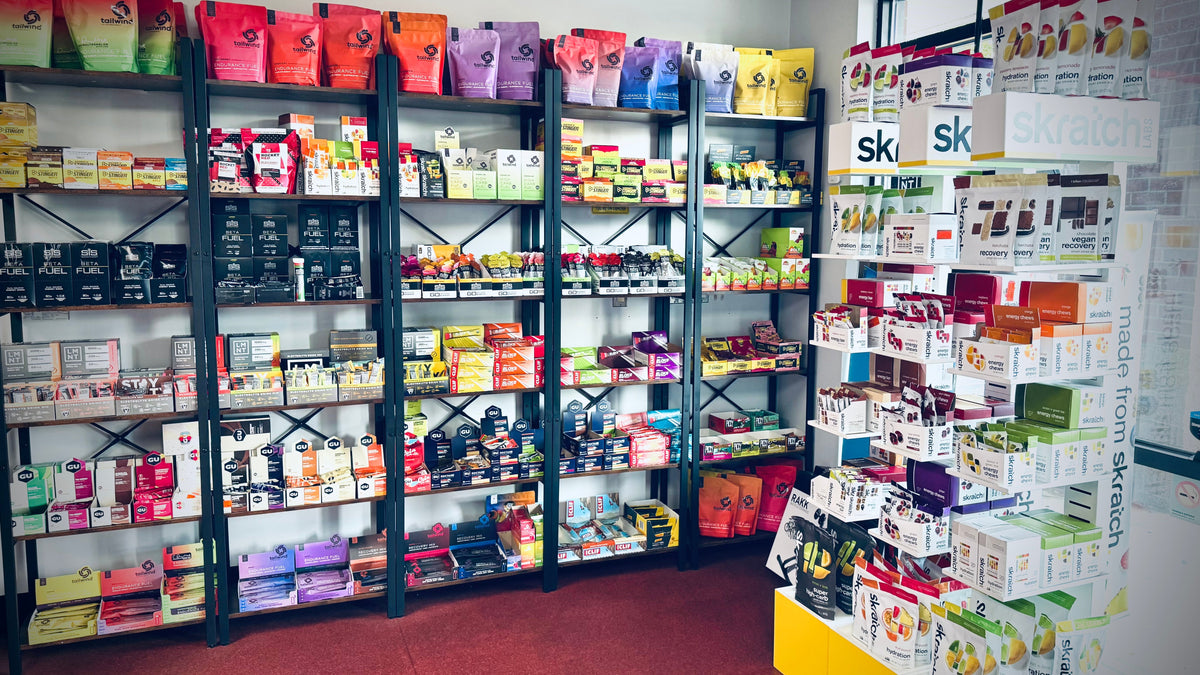
For the high-intensity stuff, we keep packaged fuel in the pocket next to the fruit. A Honey Stinger Waffle, an SiS Beta Fuel gel, or a bottle of Tailwind covers the moments when chewing a banana is not happening, and the full spread is in our nutrition section.
And yes, that is a real banana in the photo up top, held up to a road sign that reads Wrong Way, Bikes Excepted, which felt appropriate.

All the ride nutrition we carry is on one page, and we ship nationwide. Questions about fueling a long ride or your first race? Ask us.
Shop ride nutritionEat well out there, and try not to sit on the banana!