



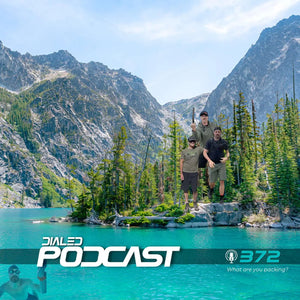
The Rundown: Everyone is finally back around the table, and they came with opinions. This one runs through the Tour de France Femmes the guys admit they slept on, a hard talk about weight in pro cycling and whether it is fair to comment on it, the way e-bikes are quietly taking over, and a Hot Seat about whether you would ever carry protection on a ride. Plus a mailbag, a vacation story involving a dog and 106 degree heat, and a brand new baby that blew up a guys' weekend. Still here, still riding, still making a podcast.
Backpedal: drag shows, a dog he tried to run into the ground, and a baby five weeks early
Matt opened with a backpedal that had almost nothing to do with bikes and everything to do with travel. He coached swimming and running, flew to Michigan for family, then peeled his middle kid off to a swim zones meet in Northern California, where he spent a week running twice a day in 106 degree heat while babysitting his sister-in-law's dog. His words, not ours: he was trying to run that dog into the ground, and the dog won. The Michigan leg also included a very late night out in Ann Arbor with his brother-in-law, who has a stake in a beer garden and a club, and a story about drag shows that Matt swears is better heard than summarized. He did get one real ride in with David Goodman and a surprise catch-up with Mike Reddig out commuting.
Lance went to southern Utah for what was supposed to be a college-buddy reunion and turned into a front-row seat to a birth. One of his friends, married for the first time at 53, had a wife due in a month; her water broke the morning the group was set to go hike and explore caves, and by seven that night there was a baby, four and a half weeks early. The crew treated it like their first grandchild. Lance also crashed the Utah governor's cabinet retreat as a plus-one, delivered Crumbl cookies to a friend at a Tesla supercharger, then raced the six hours of Mount Hood at Alcea Falls as a duo with Chris Surratt, fourth of ten teams, passed by a twelve-year-old in the final two minutes. He followed it the next day with a dirt crit, the Kermesse, the unofficial open of cyclocross season.
Ian was the late arrival, the bloody Wenka returning from five weeks abroad. He spent two weeks in Garmisch-Partenkirchen in Bavaria, where he lived for fourteen years, then visited his mom in the UK and his daughter who just moved to Edinburgh. He rode his gravel bike on road tires, swapped to gravel tires for some off-road days, and came home with the observation that drives the back half of the show: nearly every bike he saw over there was an e-bike. Jake, for his part, was honest that he has been working too much to ride, but he and his wife got away to Leavenworth for their anniversary and hiked to Lake Valhalla and then Colchuck Lake in the Enchantments, eleven and a half miles and 3,200 feet of climbing to a lake so teal it looked painted on.
EPO Chain Mail: the Champs sendoff, a Patagonia dare, and beep-boop wheels
The mailbag kicked off with the final stage of this year's Tour. A listener from Portland loved that the organizers took official times early and let the riders simply road race the closing laps, and the guys agreed it was the most exciting final stage in memory, rain and all, with Wout van Aert and his teammate one-twoing Tadej Pogacar on the Montmartre climb to drop him, a sight nobody had seen in years. Ian made the case for keeping the traditional Champs finish as tradition, then doing the racing version every four or five years to make it special. Jake's pitch: race it for real, then push the safety cutoff out a bit and let everyone link arms for the champagne lap afterward.
From there it got lighter. A listener from Anaheim handed Lance an assignment to go ride gravel in the Patagonia region of Chile; he accepted on the spot and drafted all three of them to come along. And a note from Danbury, Connecticut pointed out that Zipp wheels now build in SRAM AXS tire-pressure sensors, officially making them part of the beep-boop family, which led to the obvious question of whether your wheels should beep when you check pressure.
The Tour de France Femmes we slept on
An emailer gave the guys a fair ribbing for skipping the Tour de France Femmes, and they took it on the chin. Jake admitted he just never made time to watch this year, so Lance ran the recap, and it was a good one. Pauline Ferrand-Prevot won it as a French rider, the first home winner of the women's Tour, and her story carries weight: she had stepped away to mountain biking, won Olympic gold in Paris, then announced she would return to the road hoping to win the Tour within three years and did it in year one. She did not really show her hand until the final two days in the Alps, then won by three and a half minutes over Demi Vollering, with defending champion Kasia Niewiadoma third.
The breakout of the race was young French rider Maeva Squiban, who attacked the field on the hilly stage six for a long solo win, then crested the Col du Granier alone the next day and held off the chase down the descent to make it two solo stage wins in a row. The guys' verdict was unanimous: great racing, big crowds, fantastic coverage, and well worth going back to watch the recaps. Lesson learned for next year.
Hot Seat: weighing in on weight
The first Hot Seat was the heavy one. During the Femmes, there was a lot of public commentary about the winner getting very lean for the race, and the guys dug into whether that kind of comment is fair, and where the line is. To her credit, the rider herself addressed it head on, saying plainly that her race weight was not sustainable or healthy, that it was a number she hit for this race and would not hold. The guys sat with that honestly. They acknowledged that endurance sport has a long, real history of disordered eating across both men and women, that the pressure of contracts and results is enormous, and that getting too light eventually costs you, you get sick, you blow up, you lose the durability to perform day after day.
Where they landed was nuanced. Comment on the demands of the sport, sure, but be careful turning it into commentary on a person's body, and be especially careful given that checkered history. They raised the harder questions too: if being competitive requires getting dangerously light, and that messes with hormones and long-term health, are riders being pushed out of the sport, and is there any fair way to set a floor the way bikes have a minimum weight. No clean answers, just four guys who have all wrestled with their own race weight talking about it like adults. Lance was candid that he rides best around a number he cannot safely hold, and pointed to the bigger issue, that one rider's extreme sets a worrying standard for the whole peloton. If any of this hits close to home for you, this is the kind of thing worth talking through with a doctor rather than chasing a number.
Hot Seat: e-bikes are taking over, and is that a bad thing?
Ian's question came straight from his trip: in Bavaria it felt like 95 percent of the bikes he saw were e-bikes, road, mountain, and town bikes alike. Will it go that way here, and is that bad? Jake's answer was an emphatic no, it is not bad, and yes, it is coming. He loves what e-bikes do for the sport: they get people outside who would otherwise be on the couch, they help injured riders rehab, they give heavier riders an on-ramp, and they turn car trips into bike trips. More people on bikes is simply better, full stop.
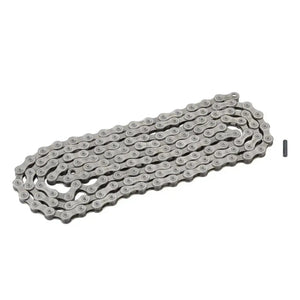
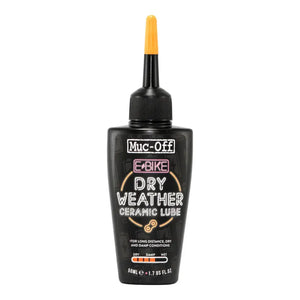
Matt agreed and pushed back in the same breath. He thinks e-bike numbers will climb here, and that this is great for building bike lanes and cycling culture, but he does not buy that e-bike riders convert to road riders; once people are on an e-bike, they tend to stay there, and that is fine. The real worry the guys share is kids on cheap, fast e-bikes that are functionally electric motorcycles, no real pedaling, 28 to 35 miles an hour, ridden without much sense of road legality. Jake noted his city put out a warning, picked up by the Columbian, that these would be ticketed and impounded. Everyone agreed the commuting and cargo case is brilliant, especially in cities built for it, and that the only place an e-bike clearly does not belong is alongside human-powered bikes in competition. Worth remembering that the lab services a ton of e-bikes, so keeping a STEPS drivetrain clean and a fresh chain on it matters as much as on any bike.
One last thing: are you packing protection?
Jake's final question grew out of planning overnight hikes with his wife and wondering about carrying something for safety in the backcountry, then bleeding into whether you would ever carry protection on a bike. The stories came fast. Lance had a teammate attacked on a bike path years ago by a man in a mental health crisis who threw a rock and destroyed his wheel; that rider, who happened to be military, started carrying afterward. Ian had a road-rage encounter so bad his life felt genuinely threatened, and he carried mace for a couple rides before letting it go. Lance also recalled bear spray being near-mandatory at the Last Best Ride in Montana bear country, taped to top tubes and stuffed in bottle cages.
The honest consensus: most of them carry nothing now, but none of them would rule it out, because trauma changes your calculus and they have all had scary moments on the road. The counterweights they kept circling were real ones, escalating a situation that did not need escalating, the risk of a pepper spray canister rupturing in a crash, and the simple fact that nobody wants to add five or six pounds of handgun to a seventeen-pound bike they starved themselves to lighten. Matt's sharpest point was that the mere appearance of protection, even a jersey that implies it, might de-escalate a road-rage driver more than the thing itself ever would. The throughline under the jokes was a serious one: drivers treating cyclists as objects instead of people is how the worst moments start.
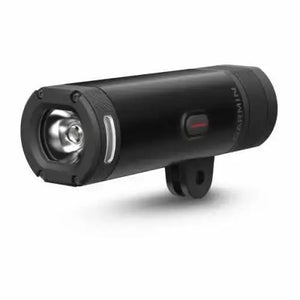
Speaking of being seen and protected, this is exactly where a Garmin Varia setup earns its keep. Rear-view radar warns you about traffic coming up from behind, and a camera puts footage on record if a driver does something stupid. The Varia RCT715 radar with camera or the newer Varia RearVue 820 give you both the warning and the receipts, which is a far more practical kind of protection for the road than anything in this Hot Seat.
One last thing: getting back to people, and a new lab on the way
Around the table, the wrap-ups: Ian shouted out Evan Price for working on his bum knee, Matt fixed Evan's wheel and tire, and Lance put out three new videos, the six hour Mount Hood race, the Kermesse dirt crit, and a road-plus-mountain multi-sport day near Bryce. He is racing two more crits this weekend to help lead out Chris Surratt's BAR points. Jake closed with something honest and a little raw: the summer has been bonkers, the lab has been buried, and he has fallen behind on getting back to people, not out of avoidance but out of sheer volume. He asked for a little grace and promised he is coming back around soon. And the news everyone has been waiting on: tenant improvements on the new space should start any day now, with a move-in target around mid October, ready for the holidays.
That is 372. A Femmes recap worth catching up on, a grown-up conversation about weight, a clear-eyed take on e-bikes, and a Hot Seat that started funny and ended on something that matters. The guys will be back, whenever it feels right.
Talk to the guys
Got a question or an idea for the show?
Ask us anything about the podcast, pitch a topic for a future episode, send general feedback, or ask about gear. We read every one.