



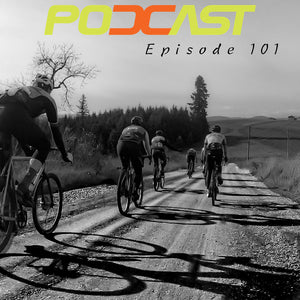
The Rundown: Podcast 101 is a full gravel podcast, and the guys cover plenty of ground. They share what worked on a recent Yamhill gravel recon ride, how gravel racing grew from a handful of riders into a movement, and why it still feels like the wild west compared to road racing. They get into what separates a gravel bike from a cyclocross or road bike, tire choice, tubeless sealant, and what to carry when you are far from help. They also compare it to triathlon, plus a few good flat tire stories. Read on for the highlights, then hit play above for the full conversation.
Dialed Podcast 101 recap
The Backpedal: a good week, a gravel recon, and a long drive
The podcast opens with the guys catching up on their weeks. Jake and Evan rode a race recon of the Yamhill gravel course and got lucky with weather that cleared right as they rolled into town. The gravel was in good shape, and the guys liked how little washboarding and how few potholes they hit. Jake's shoulder started talking back around mile fifty, which turned into a theme for the rest of the ride.
Lance drove to Utah and back to surprise his daughter for her birthday, squeezing in a ride in Boise and an indoor trainer session in a hotel room on a portable trainer. He also made it to a big Sunday group ride on Sauvie Island and held his own in the mix. Matt had a fun birthday workout built around the number 50 for a listener turning 50, and Jake rode with the team and the juniors.
Leadout News: a Tour Down Under finish and a cancelled race
Lance ran through the news. Richie Porte took the overall at the Tour Down Under, though he lost a climb he had owned for years to a first-year rider. The guys also liked seeing more pros post their power files and rides on Strava, and the idea that anyone can see the work behind a result.
The cyclocross world championships were coming up on a Sunday that also happened to be Super Bowl Sunday, so a viewing party was floated. They also noted that the Tour of Hainan in China was cancelled because of the coronavirus, and wondered if it was the first race called off over a virus.
How gravel got here and why it keeps growing
Evan kicked off the history with an old Army bicycle trip from Montana to Yellowstone over unpaved roads. Lance and Matt pointed out that gravel riding has always existed, but gravel as its own category, with its own races and bikes, is a much newer thing, roughly a decade old. Jake credited events like Dirty Kanza with putting it on the map, and the guys named other big names like Crusher in the Tushar, Belgian Waffle Ride, and Rebecca's Private Idaho.
They agreed part of the appeal is that gravel mixes the casual and the competitive at one start line. Fewer cars, great scenery, and a relaxed vibe sit alongside a fast front group. Because there is no governing structure or set categories yet, Lance compared it to the wild west, and to mountain biking in its early days.
Racing smart and riding prepared
Lance was surprised at how road-like gravel racing is, with pacelines, groups, and tactics, and noted that descents split fields up because skills vary. The guys also talked about carrying more than a normal flat kit. Lance wears a hydration backpack to carry extra tubes, sealant, a plug kit, and food, and Jake suggested riding with someone else when you head into remote areas. A buff over your nose and mouth helps with dust, and thick socks help with flying rocks.
Evan and Lance traded flat tire stories. Lance once rode out on a rim, and in a recent stage race he flatted in a rock garden and had to spin the wheel to make sure the sealant held. The takeaway: practice your tubeless fixes before race day.
What makes a gravel bike different
Lance explained that a gravel bike sits between a road bike and a cyclocross bike, with a slacker head tube angle that makes it more stable on descents. Jake added longer wheelbase, a taller head tube, a lower bottom bracket, and a wider gear range. He also loved how comfortable his gravel bike was after hours in the saddle.
You can use a cross bike for gravel, but Lance explained why it feels twitchier, including a crash he had on a loose descent. The guys also talked about whether a road bike can handle gravel with 28s or wider tires, carbon versus aluminum feel, and when you want a knobbier tire for loose climbs. Matt, who is shopping for a gravel bike, got teased about his current ride.
Could triathlon go gravel?
The guys wondered if triathlon could embrace gravel the way Xterra embraced mountain biking. Matt and Evan thought a gravel-based triathlon would be easier on race organizers because there are no road closures, and would probably draw a smaller, dedicated crowd. Jake thought it was a more natural step for triathletes than moving to a mountain bike.
Evan was optimistic about gravel's growth at a time when road racing seems to be struggling. Lance mentioned Peter Stetina's move to race gravel on his own sponsors, and Jake said manufacturers are racing to put gravel bikes on the market.
One Last Thing
For One Last Thing, Evan teased a future podcast about a new professional triathlon organization. Matt mentioned a YouTube video with goggles to give away. Jake paid tribute to Kobe Bryant and the other lives lost in the helicopter crash, sharing a memory of meeting him and his daughter, and sent his thoughts to the family. Jake also pointed listeners to a four-minute Yamhill gravel video on the Dialed Cycling YouTube channel.
Listen to the full podcast
This recap only scratches the surface. Hit play on the player above, or find Dialed Podcast 101 wherever you get your podcasts.
More Gear From This Podcast
Talk to the guys
Got a question or an idea for the show?
Ask us anything about the podcast, pitch a topic for a future episode, send general feedback, or ask about gear. We read every one.