



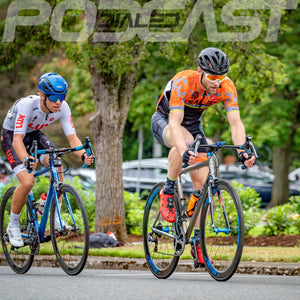
The Rundown: Jake, Lance and Evan Price sit down with a special guest, Mike Guyvan (better known as Beef Mountains), to ask a question plenty of riders wrestle with: how fast can you get on a limited amount of training time? Mike is a busy working family man who still manages to out-climb most of the group, and he walks through how he trains indoors, why intervals matter so much, and how his diet changed. The guys compare their own sweet spots for weekly hours and talk through what actually works. Read on for the highlights, then hit play above for the full conversation.
Dialed Podcast 213 recap
Meet Beef Mountains
The podcast kicks off with the origin of Mike's nickname. Beef Mountains stuck after a KOM turned up on Strava, and the comments kept rolling in until he changed his name on the app. Mike says he actually likes it, because you can't be Beef Mountains and be slow.
The guys also joke that more people probably know him by that handle than by his real name. Mike mentions that most of his riding happens indoors on Zwift, which sets up the topic nicely, since time is the thing he has the least of.
The Backpedal: rocks, rides and a long season ahead
Evan is packing for a triathlon in Oceanside, California, and is trying something new: training hard right up until about five or six days out and seeing whether he can recover in a very short taper. He had a big training week at home before that and says his training partner stuck with him through nearly every rep.
Lance is back from a month away at training camp, and the conversation takes a detour into his rock collecting, from fire agates to obsidian found along a gravel race course. Back home, the guys got in a road ride and a gravel loop out near Larch Mountain, and Jake went a full week without riding Zwift for the first time in ages.
Leadout News: a young sprinter takes Ghent-Wevelgem
On the racing front, the guys talk about Ghent-Wevelgem, where a small break stayed away and the finish turned into a game of cat and mouse. A young Eritrean rider launched a long sprint and held off the other three. Evan points out how many strong endurance athletes come out of East Africa and wonders what would happen if more teams from that region came into the pro ranks.
They also discuss Peter Sagan pulling out of the Tour of Flanders because he wasn't feeling race ready, and debate whether the next generation has moved past him. Jake isn't ready to write him off completely just yet.
How Mike gets fast on limited time
Mike explains that his approach starts with intervals, almost every day. He rides about an hour a day for a long stretch, then bumped up toward ten hours a week after hearing Jake call that his magic number. He uses ERG mode on a smart trainer because it keeps you honest and teaches you to push through the suck, which carries over to flogging rides and races.
Evan adds that a big part of what Mike does is sweet spot work, and that his sweet spot is a different animal from most people's. Mike also describes how he builds a base through the winter with longer blocks, then switches to short, hard intervals when he wants to peak. He says base fitness is harder to earn but lasts longer, while peak power comes and goes.
Diet, rest and mindset
The conversation turns to how Mike dropped weight while his power held steady. He cut back gradually, starting with sugar in his coffee, and kept an eye on his power meter the whole time because he didn't want to lose watts. He also talks about borscht and brisket, which Jake and the guys got to try at training camp and loved.
Mike gets up early for work, rides when he gets home, and tries not to eat in the evening so his body can focus on recovery. The guys agree that what works for one body may not work for another, and that nobody at the table is a dietitian. For Mike, the real driver is the competitive streak, not dieting for its own sake.
How many hours do you really need?
Jake says ten to fifteen hours is his sweet spot, and Lance lands around fifteen. Lance says you can make real progress on about five hours if the workouts are focused, with some high intensity and a couple of sweet spot sessions, and he brings up TrainerRoad as one structured option. Evan pushes back a little, saying a coach or just riding for fun suits many people better, and that your past training history matters a lot when you shrink your hours.
They wrap up with a rough guide. Six hours a week is about the bare minimum to be competitive in the lower race categories, and eight to ten starts to get you further. Jake's advice is to be consistent, get the quality work in, and accept that it will take a little longer to build.
One Last Thing
For One Last Thing, Evan is flying down for his race with a house full of fellow triathletes, and Lance is lining up for a mountain bike race. Mike hints he's coming for a friend's Strava times, and Jake points everyone to a vegan cyclist's YouTube video about a cyclocross-style event that looked like a go-kart track.
The guys spend a few minutes daydreaming about how they might pull off something like that locally, tossing around ideas for land and tracks in the area. It's a fun note to end on, and a reminder that cycling is supposed to be enjoyable even when you're short on time.
Listen to the full podcast
This recap only scratches the surface. Hit play on the player above, or find Dialed Podcast 213 wherever you get your podcasts.
More Gear From This Podcast

Talk to the guys
Got a question or an idea for the show?
Ask us anything about the podcast, pitch a topic for a future episode, send general feedback, or ask about gear. We read every one.