



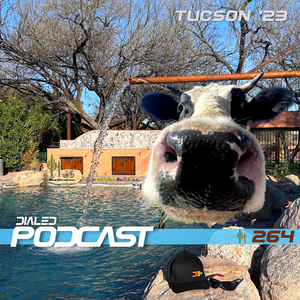
The Rundown: Podcast 264 comes to you from Tucson, Arizona, where the guys and a handful of teammates are four days into the team's 2023 cycling camp. Jake von Duering and Lance Heppler sit down on the patio of a rented complex with riders who have done camps before and a couple of first-timers, and they talk about what a camp really is, how hard it feels, and what everyone gets out of it. The short answer is a lot, and you can do it. Read on for the highlights, then hit play above for the full conversation.
Dialed Podcast 264 recap
Camp at Lola's place
The guys recorded this one from the patio of a big rented complex in Tucson that they ended up calling Lola's house, after a very friendly cow in the back pasture. Jake and Lance introduce the riders at the table, and a few of them are new to this kind of week. The camp was four days in with two riding days still to go, and the weather had been a steady, sunny 72 degrees.
The plan was big days in the saddle, with the van following along. Lance's wife Brandy drove the support van all week, handing out water bottles and ice cold Cokes, and the group came to love spotting that van around a corner.
Nerves, Mount Lemon, and the legs giving in
Two of the first-timers talked about what they expected coming in. One of them works a busy job, has young kids, and some weeks only gets a single Tuesday night ride, so a week of long days was a big unknown. The other figured his legs would quit around day two or three. Neither of those happened.
Mount Lemon was the headline climb, about 20 miles of steady grade with almost no breaks. One rider described the point where the legs stop resisting and just keep doing the work as long as you keep feeding them. The guys agreed that when the only things on your list are riding, eating and sleeping, your body adapts faster than you would think.
How Tucson compares to past camps
This was year five of the team camp, and the group has been to places like San Diego and the Anza-Borrego desert in past years. Tucson turned out to be different. Instead of short, brutal punchy climbs, you get one long, steady grind that suits bigger riders well, followed by a descent that runs for more than half an hour with big sweeping turns where you barely touch the brakes.
The guys traded favorite descents from camps past, including the run down into Borrego Springs, where a couple of them raced each other down and could not stop smiling afterward. They also talked about the chase back and forth on Lemon that ended in a dead heat at the top.
What a camp does for your fitness and your head
Asked what they take away from a camp, the answers came back to the same few things. There is a big fitness bump that carries into the spring race season. There is a mental boost, because a hundred mile gravel race looks a lot less scary after you have done long days back to back. And there is real pack riding practice that is hard to get otherwise, like learning which wheels to follow and how hard to go to close a gap.
Lance added that a week like this is also a chance to test your fueling. If you have ever gotten it wrong in a race, you know how quickly things fall apart, and a camp lets you work out what gets you through five or six hours.
Keeping the fitness after you get home
One of the riders asked how to hold on to what he built here once he is back home and the race season is a few weeks off. Jake's answer was that you will not stay at a peak, and what you are doing this week is not sustainable. What helps is a structured plan that fits your hours, knowing which races are your A races, and treating others as training. He also pointed out that camps put you around people with plenty of experience, so ask them how they train, rest and recover.
The riders also shared what they are looking forward to this season, from time trials and road races to a long list of gravel events, and the guys talked about how family and weather make any plan a moving target.
Making camp easier to say yes to
Camp organizer John Hatfield said he would love to see more people come, including newer racers, juniors and women, and that no one has to do the full distance. In past years the team has offered an A route and a B route so riders can cut a chunk off a day, and a van with cold drinks makes a big difference on the long climbs.
Jake talked through the cost and the logistics. Splitting a rented house among a dozen or so people costs less than a motel room for one, and a couple of people cook dinner each night, so you only cook once all week. If you do not have a support van, you can plan stops for water, food and restrooms ahead of time. And you do not have to fly anywhere warm, since a drive across the state can work too.
One Last Thing
The guys wrapped with their One Last Thing picks. Dan's was to wear sunscreen, after a rough first couple of days that earned him a team award in his honor. Tim's was simply to ride your bikes and have fun. John pointed out that the best part of camp is being able to eat whatever you want all week, and Lance encouraged anyone, serious racer or not, to set aside a week for riding, eating and recovering to find out what your body can do.
Lance also compared the camp to a luxury cycling vacation he took recently. That trip was great, with shorter days and better food, while camp is more about fitness and race prep. Jake closed by saying the best part for him is spending the week with good friends who care about the same things.
Listen to the full podcast
This recap only scratches the surface. Hit play on the player above, or find Dialed Podcast 264 wherever you get your podcasts.
More Gear From This Podcast

Talk to the guys
Got a question or an idea for the show?
Ask us anything about the podcast, pitch a topic for a future episode, send general feedback, or ask about gear. We read every one.