



The Rundown: Gravel racing keeps growing, so the guys spend this podcast on how to race it better. Jake von Duering, Lance Heppler and Matt LeGrand cover where to line up at the start, which skills carry over from road, mountain bike and triathlon, and the small aero gains that add up over a long day. They also talk about what to carry for flats and fuel, how to descend and climb faster, and which bike computer features help you pace a race. Read on for the highlights, then hit play above for the full conversation.
Dialed Podcast 273 recap
Start-line strategy and knowing the course
Lance likes to be on the front row, which means finishing his warm-up about 20 minutes before the start and getting to the start chute early. A sweatshirt handed off to a teammate or spouse helps if it is chilly. Where you want to be depends on the course. If it starts flat, sitting somewhere in the first couple dozen wheels saves energy, keeps you out of the worst dust and gives you a better look at potholes and buried rocks before you hit them.
Knowing the course matters just as much. Lance keeps the route and its climbing profile on his computer so he knows how long a climb is and where the steep ramps sit, which lets him pace the effort. They also talk about how hard it can be to tell who is racing your distance when the short and long courses share a start, and joke that a color-coded ribbon would solve it.
What to borrow from road, mountain biking and triathlon
Road racing tactics still matter in gravel, though the guys put pack dynamics at maybe 40 percent of the race instead of 90. That leaves room to claw back after getting dropped, which makes gravel a bit more forgiving. Lance says a dropper post could pay off on courses with real descents, and Matt jokes that the huge time trial helmets from the Giro belong in gravel.
The aero bar debate gets some airtime too. Several race directors ban them, Unbound bans them for pros but not everyone else, and the guys lean toward keeping them out where people draft. Matt points to triathlon for fueling, since a ten-hour Ironman and a long gravel day ask a lot of the same things from your nutrition.
Free speed: aero gains for gravel
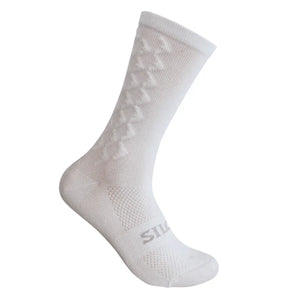
Lance and Matt run through what Dylan Johnson found in the wind tunnel for his gravel bike. A hydration pack on your back can be more aero than bottles on the frame, front burrito bags cost a surprising number of watts, and a frame bag acts a bit like a fairing. Aero socks and shaved legs are each worth several watts, which adds up over hours.
Matt adds that the rider is roughly 70 percent of the drag and the bike about 30, so body position and gear placement matter most. Lance even tapes his race number to the head tube when the rules allow, since a number flat on the bars acts like a little billboard.
Descending, tire pressure and line choice
Lance credits mountain biking for his descending. He knows his tire limits because he has found them the hard way, and runs 40 millimeter tires around 28 to 30 PSI. He also keeps the map page up on his computer so he can glance at how sharp the next turn is and carry speed through the easy ones. Jake cautions that lower pressure is not automatically better and says to experiment on training rides.
For anyone who wants to descend better, Jake suggests riding stuff that is more technical than you will race on, like loose rock, roots and off-camber turns, so normal gravel feels easy by comparison. Lance adds that picking a smooth line, bunny hopping potholes and following a faster descender all help, and clean photochromic lenses let you see what is coming.
What to carry: flat kit, fuel and hydration
Lance's gravel kit is a tube, two CO2 cartridges with an inflator, a multi-tool and a plug kit. He is a big fan of Dynaplug, and he also carries a sidewall boot, since a sliced sidewall ends many days at big events. Jake has moved to a small pouch instead of a saddlebag and keeps a tiny pump as a last resort, and Matt reminds everyone a hand pump is fine on a casual ride.
They also talk hydration. Lance has been trying a new hydration pack that stayed put on a mountain bike race, and says carrying more water can let you skip aid stations, though a quiet stop can also be a nice reset. Calories matter most. One teammate learned the hard way that an electrolyte-only drink has no fuel in it, so Lance packs high-calorie mixes and eats every 20 to 30 minutes.
Pacing and tech while you race
For climbing, the guys say it comes down to power to weight and practice. Lance describes knowing his governor: about 300 watts for a long climb, and anything near 340 meant cracking. Knowing that number takes time, so you have to train with it.
On tech, they put a bike computer with routing and a power meter at the top of the list. Matt notes that heart rate becomes a good secondary check, especially on a hot day when it drifts up against your power. Lance also recommends driving or riding key parts of the course beforehand, and Jake says the Wahoo climbing feature impressed him on a big day of climbing.
The Backpedal: Lance's Oregon coast gravel weekend
Lance raced both days of the Oregon Coast Gravel Epic, doing the short course each day, with a good-sized group of teammates along. On day one he was climbing better than he has in a long time, got caught behind a lighter teammate on the final climb, then took the descent segments and nearly shared a sprint finish with him, edging it by a couple of inches.
Day two was a time trial start with another long climb and a long descent. He worked with teammates early, caught another rider on the descent, and then drilled the flat pavement run to the finish alone, ending fourth overall in the short course. He also credits being able to preview the finish the day before.
Leadout News and One Last Thing
In Leadout News, the guys talk about the start of the Giro, where Remco Evenepoel won the opening time trial by a big margin and might be happy to hand off the pink jersey soon to save energy. They also touch on the women's Vuelta and Sam Long winning at St. George.
In One Last Thing, Matt previews upcoming watch and computer videos, including the Garmin 965. Lance talks through his weekend race options, and Jake congratulates the team on its early lead in the Oregon team competition.
Listen to the full podcast
This recap only scratches the surface. Hit play on the player above, or find Dialed Podcast 273 wherever you get your podcasts.
More Gear From This Podcast

Talk to the guys
Got a question or an idea for the show?
Ask us anything about the podcast, pitch a topic for a future episode, send general feedback, or ask about gear. We read every one.