


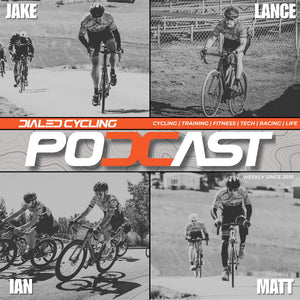
The Rundown: For podcast 16, the guys sit down with teammate Kim Kathrein to talk about women's cycling. After a Backpedal packed with gorge climbs, gravel miles and a big Mount St. Helens day, they dig into why so few women show up to group rides and races, how triathlon compares with road racing, and what might help newcomers feel welcome. Kim shares how she fell into the sport on her own, and the guys finish with a candid look at whether a professional bike fit is worth the money. Read on for the highlights, then hit play above for the full conversation.
Dialed Podcast 16 recap
The Backpedal: big rides and a birthday
Lance had a huge week, around 350 miles and roughly 22 hours on the bike, and that started a quick debate about tracking your weeks in hours or in miles. Most of the table liked hours as the better measure of effort, since a fast runner or rider covers a lot of ground in less time. He rode out to the Vista House in the Columbia River Gorge with Kim, did a gravel day on Forest Service roads near Carson, Washington, and finished the week with a team ride toward Mount St. Helens that drew seven teammates in matching kit.
Kim introduced herself to the Backpedal with a Fourth of July birthday and a long ride before a day in Hood River. She also admitted to feeling burned out after months of focused training, and said rides like the gorge and Mount St. Helens were a good reminder of why she rides in the first place. Matt talked about Zwift workouts squeezed between work calls, and Jake shared that he was finally cleared for a gentle walk.
How Kim fell into cycling
Kim got into the sport on her own. She was into softball and running, then bought a cheap old road bike at a garage sale as a teenager after being passed on a climb by two riders who were chatting and not even trying hard. She fell for the speed and the distance, and she didn't know anyone else her age who rode.
The guys compared that with the usual routes they see: a partner or family member who rides, a charity event like Seattle to Portland, or a runner or athlete who gets steered to the bike by a knee injury. Matt wondered whether an event to train for could be a gentle on-ramp, with racing as the next step.
Why women's fields stay small
The guys and Kim spent a good stretch on why women's cycling fields are so much smaller than the men's. Lance pointed to group riding itself, since riding inches from another wheel is a lot to ask of someone who has never done it. Kim added that many team rides are fast and mostly men, which can feel intimidating to a newer rider, and that road racing is simply less familiar to most people than something like an Ironman.
They also talked about cost, with Matt describing a video he made on how expensive it is to get started in triathlon. Kim said some riders just don't have the drive to go out and hurt people, and that getting dropped from a pack is a different feeling from finishing a triathlon against the clock. She pointed out that the road racing community has been welcoming to her, with only the rare teammate-unfriendly rider in a small field.
Triathlon, road racing and the welcome mat
Kim asked why triathlon seems to attract more women than road cycling, and nobody had a clean answer. Matt suggested cycling's history as a male-dominated sport and noted that triathlon participation has started to level out in the US, while the sport overall may be shrinking as obstacle and adventure races grow. Jake brought up how many people sign up for big events like STP, where a large share of the field is women.
The guys talked about ways to make the door wider. Non-drop rides with A, B and C groups, a beginner women's ride focused on pack skills, and the Portland International Raceway weekly races and novice clinics were all on the table. Lance praised the Thursday night ice cream rides, which are relaxed enough that newer riders show up, and Kim said her biggest wish is simply more women to race and train with.
Topic two: is a bike fit worth it?
Lance and Kim have both skipped a formal fit. Lance goes by feel and by measurements he carries from bike to bike, and Kim films herself on the trainer and adjusts when something looks off. Matt has had two professional fits, including one when he was new to triathlon and preparing for his first Ironman, and he thinks that fit helped him stay comfortable over a long day.
The group agreed that cost and time are the usual hang-ups, since a good fit takes a couple of hours and may need follow-ups. Jake explained how a goniometer and a simple knee angle check can get you started at home. They also talked about phone apps for measuring angles, how an aero position matters more than most gear, and the idea that a fit should be tailored to the rider and not follow a cookie-cutter formula. Kim said a gain like twenty watts would easily be worth the money.
One Last Thing and a thank-you
Lance is excited for short track racing that night before heading to Sun Valley, Idaho. Kim is gearing up for cyclocross, and she shared a run-in with a tree at Lacamas Lake on her first cross ride back. Matt thanked everyone who listens, subscribes and shares the show, and said he would like to start a question and answer segment based on listener topics.
Jake marked how far the show had come by podcast 16, with listeners in several countries, and encouraged people to leave a review on iTunes. He also looked ahead to cross season and the open practices the team hosts for anyone who wants to come out and ride.
Listen to the full podcast
This recap only scratches the surface. Hit play on the player above, or find Dialed Podcast 16 wherever you get your podcasts.
More Gear From This Podcast
Talk to the guys
Got a question or an idea for the show?
Ask us anything about the podcast, pitch a topic for a future episode, send general feedback, or ask about gear. We read every one.