



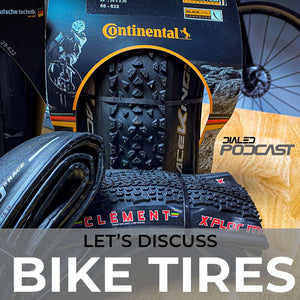
The Rundown: Tires are one of the easiest ways to change how a bike feels, and also one of the easiest places to run into trouble. In podcast 170, Jake, Lance, Matt and Evan (plus a surprise guest dropping in late) work through road, gravel and mountain bike tires: tubeless versus tubes and tubulars, wider rubber and lower pressures, tire inserts, and the little tricks that make changing a tube less miserable. They also catch up on a rainy week of riding, Zwift subscriptions, a dead shifter battery, and a busy weekend of gravel racing. Read on for the highlights, then hit play above for the full conversation.
Dialed Podcast 170 recap
The Backpedal: a back on the mend and a wet gravel ride
Lance opens by saying he took about five days off the bike while dealing with some back trouble. He eased back in with a solo ride that included a couple of hard segments, and his heart rate was well above normal after two weeks without intensity. He and Jake then rode around north Clark County on Saturday, with Lance happily sitting on Jake's wheel, and headed out on gravel bikes in the rain the next day. Matt's highlight was a trail run, and the guys happened to roll up on him mid-run.
The conversation drifted into Zwift. A couple of the guys are canceling for the summer, since most of their rides there are easy spins and the bike computers can control a trainer on their own anyway. Jake also shared a lesson about electronic shifter batteries: his shifter quit a few minutes into the flogging ride after about two years on the original battery, and the lesson is to swap it out before it gets that far.
Why tubeless has won most people over
The guys started with the basics. A tubular tire is a tire and tube in one that gets glued to the rim, while a tubeless tire seals directly to the rim with sealant that plugs small punctures. Lance still keeps tubulars on a cyclocross pit bike, but he says tubeless has improved so much in the last few years that most of the old reasons to run tubulars have faded.
The tradeoff is installation. Getting a tubeless tire to seat can be a fight, and a shop-style air compressor makes it far easier than a hand pump. Lance recalled one tire and wheel combination that refused to seal until a teammate with a bigger compressor got it done. Jake and Lance both keep a small bag of tricks for the road, and a tube is still the backup when a cut is too big for sealant.
Road tires: 28s, Pirellis, and a supply problem
Jake and Lance have both moved up to 28 mm tires and have been testing Pirelli P Zeros after struggling to find the tubeless version of the Continental GP 5000 they used for years. Jake likes the feel of the rubber, says the tire is a little lighter and spins up quickly, and notes that it fits his frame with more clearance than the Continental did. He has not come home with a sealant streak up the seat tube yet, which he used to see often.
On pressure, Jake runs in the high 70s, a touch lower in front for cornering, while Lance runs much lower at around 60 and says the plusher ride feels fast and comfortable. Jake also described using a tougher Pirelli tire in winter for extra flat protection, then swapping back to the racier tire when the weather improves. Lance plans to leave his racier tire on year-round.
Changing a tube without the drama
Matt told a funny story about helping a family member through a late-night tire change over FaceTime, and it turned into a good tutorial. The big trick is pushing both beads down into the center channel of the rim, which creates the slack you need to get the last section of tire on by hand. Using a tire lever carefully matters too, because pinching the tube is the most common way to ruin a fresh one.
The guys also stressed checking the tire itself before you put a new tube in. Lining up the tire label with the valve stem helps you find where a puncture happened, and running your fingers around the inside of the tire can turn up a tiny wire or thorn that would flat the new tube right away. They also pointed out that if a rider only gets out occasionally, sealant dries out and tubes can still make sense.
Gravel and mountain bike tires
For gravel, Lance races on 40 to 42 mm tires and looks for low rolling resistance with enough side knobs to hold corners. He has used WTB, Schwalbe and Maxxis options, and likes the confidence of the wider tires with inserts. He mentioned running very low pressures on muddy, rough courses and a bit higher on smoother ones. Jake went through the tires he has tried, and noted that the Pirelli gravel tire he is using now does well on chunky terrain but does not corner well on hardpack and pavement.
Both guys are fans of tire inserts, which add sidewall support and cushion at low pressure, though they cost real money and are a hassle if you have to tube a tire. On the mountain bike side, Lance picks a fast cross-country tire and runs more side knob up front than in the rear, since the front is the wheel that washes out. Jake added that a dropper post made him feel his tires work for the first time.
Leadout News: gravel season and the Giro
Lance rounded up a heavy weekend of gravel racing, including events in Texas and Arkansas that pulled in World Tour riders, former Unbound winners and YouTubers. The guys were impressed by a Dialed Podcast guest from earlier in the season finishing near the front, a racer who came back to ride just a few weeks after a serious injury, and two women who rode the final miles together and crossed the line side by side. They also talked about how many of these rides and races are unsanctioned and wondered how anyone knows they are fully clean, while saying the scene still feels fun and pure right now.
On the Giro, Evan joined in with Lance and Jake. They agreed Egan Bernal looked very strong and that it would take a bad day for him not to win, with the time trial still to come.
Listen to the full podcast
This recap only scratches the surface. Hit play on the player above, or find Dialed Podcast 170 wherever you get your podcasts.
More Gear From This Podcast
Talk to the guys
Got a question or an idea for the show?
Ask us anything about the podcast, pitch a topic for a future episode, send general feedback, or ask about gear. We read every one.