


The Rundown: Fall is when a lot of riders start asking what to do with the off-season, so the guys spend this podcast defining one and debating how long it should be. They start with a rundown of their own weeks, including a running conference at altitude and a big decision about hiring a coach. Then they get into when the off-season falls for cyclists, triathletes and runners, whether you need a full break at all, how to avoid big peaks and valleys, and what they each have planned for the winter. Read on for the highlights, then hit play above for the full conversation.
Dialed Podcast 242 recap
The Backpedal: altitude, a new coach and a hurt hip
The podcast opens with the usual catch-up. Evan spent the week at a running and physical therapy conference in Park City, Utah, where researchers talked about topics like relative energy deficiency in athletes and there was a lively debate over whether everyone should run as a forefoot striker. He leaned toward the camp that says every body moves a little differently. He also got a taste of altitude on a long afternoon run, and felt lightheaded and sick afterward.
Evan also shared that he's bringing on a coach for the first time, since he'd rather put his energy into coaching other people than into planning his own training. Matt spent the week with a middle school cross-country team, and Jake got his first back-to-back days on the bike in about three weeks while his hip slowly improves. Lance called in from the end of a mountain bike loop in southern Utah, riding around 8,500 feet.
Leadout News: Kona is days away
With Kona right around the corner, the guys talked about who looks fit heading into race week and how much Evan likes following the pre-race videos from the pros. They spent most of their time on the women's race, which Evan thinks will get exciting once you look past the top of the field. They talked about how having equal numbers of men's and women's qualifying spots plants seeds for future athletes, even if some slots go to women who are well off the pace.
Jake also asked Evan how he'd do if he lined up this weekend with his current half-distance fitness. Evan wasn't sure he'd finish, then guessed that he'd get it done if he paced himself, with the swim the likely trouble spot.
What counts as an off-season, and how long is it?
The first job was defining the term. For cyclists in this part of the country, the off-season is a fairly short window after cyclocross ends and before road season picks up, roughly January through March. For triathletes it can stretch much longer, from after Kona through the early-season races, and for runners it depends entirely on the sport. A marathoner racing twice a year has different gaps than a collegiate cross-country runner whose break is the summer.
Jake brought up the traditional idea of periodization, where you drop your volume for a stretch and do other activities, and he noted that some people use the whole gap between races as their off-season. Evan said the classic version isn't for him, and the conversation turned to why.
Why Evan doesn't love a long break
Evan's main point was that endurance athletes lose fitness fast when they go sedentary, and it takes a long time to get it back. He pointed to research on how quickly muscle declines with inactivity. If you feel like you need a full break because you're mentally fried, he said the better fix is usually to change what you're doing, like trading the road bike for a mountain bike, rather than stopping altogether.
He also argued that big peaks and valleys in training are where a lot of trouble starts. Someone who feels on top of the world for two weeks and then can't get out of bed has probably swung too far in both directions. His goal is for people to enjoy their sport all twelve months of the year, with the focus shifting rather than disappearing. He added that some of the worst injuries he sees come from people who take long layoffs and then jump back in with too much enthusiasm.
Matt's counterpoint: change the load, not the love
Matt pushed back a little. After a big race like an Iron Man, he finds that dropping volume and changing the mix helps. For him that means less running and more swimming, and for runners it can mean a couple of easy weeks of exploring new trails with no intensity at all. The point is the mental relief from training pressure.
Evan agreed that something like an Iron Man is a peak you have to come down from, and that the type of racing you choose changes how much recovery you need. The guys also talked about how running is especially repetitive on the bones and tendons. They noted that athletes who grew up playing ball sports tend to be a bit more resilient, and that varied loading is often what an overused bone needs. Matt added that a scary injury history can lead athletes to fix on a weekly mileage number that doesn't have to be a hard limit.
Evan on training the gut
Evan said he didn't take an off-season last year and felt great, and he plans a block of real work heading into a spring racing run. His winter plan includes weights, some Zwift racing as a mental change from structured sweet spot work, possibly some running once the kids' cross-country season ends, and a goal of training his stomach to handle around 100 grams of carbs per hour.
That led into a good tangent on fueling. The guys agreed that if you can't process carbs, you'll always have a ceiling on your performance. Jake said he can't stomach anything sweet after a hard effort, and Evan said that falling behind on fluids can make it hard to catch up once your gut stops cooperating.
Ed's Grand Canyon plan and everyone's winter
Ed joined the show the day after finishing the Portland Marathon, which he ran without any direct training for it. His real focus is running rim to rim to rim at the Grand Canyon later in the month, about 46 miles and over 11,000 feet of climbing each direction. He explained the safety plan: five people going, everyone carrying a filter, and no one left alone. He later talked about his five-day gravel event in the summer, where he wants to finish rather than race it.
For the winter, Ed plans to keep mixing things up with snowshoeing, mountain biking, and anything new. Matt is still working back from Achilles surgery, so his off-season is more of a slow build toward easy summer races. Lance is heading to Europe for a month in a rented van, taking only a pair of foldable bikes, then planning to buckle down for road season. Jake's plan is to try earlier morning workouts and rebuild his sleep.
The wrap-up: use the quiet time to fix things
To close the topic, the guys listed what the winter is good for: bike fits, testing new nutrition and supplements while there's no race on the line, strength work like Pilates, and getting nagging issues looked at by a professional. Ed added that a coach can keep him from doing too much, and Evan said it helps to have someone you can actually talk with, because life doesn't follow a training plan.
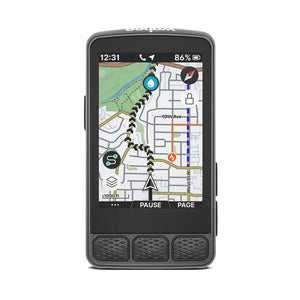
One Last Thing: Matt posted his Kona predictions video and ran his sticker giveaway, Evan planned a quiet week of training, Ed was looking forward to a few weeks at home, and Jake mentioned a new Wahoo bike computer arriving at the Lab.
Listen to the full podcast
This recap only scratches the surface. Hit play on the player above, or find Dialed Podcast 242 wherever you get your podcasts.
More Gear From This Podcast
Talk to the guys
Got a question or an idea for the show?
Ask us anything about the podcast, pitch a topic for a future episode, send general feedback, or ask about gear. We read every one.