


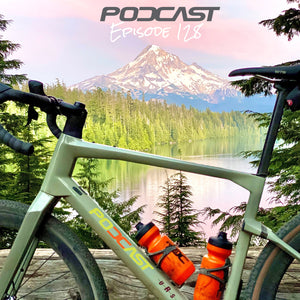
The Rundown: Jake, Matt, and Evan (with Lance dropping in from Flagstaff until his battery gave out) spend this podcast on red flags: the small warning signs in training, gear, and life that tell you something bigger is going on. The guys run through their Backpedals, react to Strade Bianca and a new Everesting record, and answer an Ask a PT question about foot hot spots. The main topic covers injury signals, heat trouble on the bike, unknown-brand wheels and frames, noises worth checking, and keeping training in balance with family and work. Read on for the highlights, then hit play above for the full conversation.
Dialed Podcast 128 recap
The Backpedal: river trips, camping, and an Ironman weekend plan
Lance's week was a river rafting trip through Cataract Canyon near Moab with his wife and his daughter, who works as a river guide. He did four straight days of zero riding and said he didn't miss it. He then headed to Flagstaff for some dental work, rode gravel, flatted twice (one fix took a quick air top-up, the other needed a Dynaplug and then a tube), and stopped at the Forrest Gump spot in Monument Valley to ride the road and grab a segment.
Jake spent a week camping at Lost Lake, where family time won out over his big gravel plans. The over/under on his fish count went to the under, since the water was warm and the trout weren't biting. Matt got in 30 minutes on Zwift and ran a tempo workout with his son, while Evan shared plans for a September Ironman-distance weekend with a shorter-distance day for anyone who wants to join in.
Ask a PT: why your feet get hot spots
Evan took this week's Ask a PT question about hot spots on the feet. The first thing he checks is cleat placement. The standard advice is to center the cleat between the big knuckle and the little-toe knuckle, but that only works for the average rider. Riders with wider pelvises, or who tilt the ankle in and load the outside of the foot, may do better with a wider pedal spindle.
He also stressed making any adjustment in small steps, because the body needs time to adapt. The other quick check is shoe size: you should be able to spread your toes inside the shoe, and if you can't, a bigger or wider shoe is the first fix before you reach for medication or a doctor visit.
Leadout News: Strade Bianca and an Everesting record
With Lance briefly in "Champ Bailey" mode before his connection faded, the guys covered Strade Bianca in the Tuscan gravel. It was run in unusual heat with few spectators, and Wout van Aert took the men's win with a late move on the last gravel climb. A flat at a bad moment ruined a couple of riders' days. Evan called the women's race the more exciting finish, with a rider on a major winning streak reeling back a Spaniard before the sprint.
They also talked about an amateur Irish rider who reportedly beat Alberto Contador's Everesting record by a wide margin after planning the climb and his nutrition like a science project. The guys wondered whether a pro team should sign him. The last bit of news was a rumor about Richie Porte possibly returning to Ineos, which left the guys unsure why it would happen.
Injury red flags and knowing when to back off
For the main topic, Matt started with the hard part for newer athletes: telling normal training soreness from a real injury. A tight calf tear is a reason to stop pushing, while sore quads are just training. Evan said he tries to reframe early aches as part of building tissue tolerance, since almost every endurance athlete has an injury history, and catching problems early beats pushing through.
Evan also talked about working with athletes who are going to keep training no matter what. He tries to shift their focus instead of taking everything away, much like adding vegetables instead of banning foods. He values trust above all, so he asks people to simply tell him what they did. For cyclists, who log very high hours in one repetitive sport, he suggested strength work and even rowing as a lower-stress way to build fitness.
Heat trouble on the bike
Jake described a ride at a training camp in Palm Springs where he noticed his heart rate climbing while his watts fell on a long climb. Goosebumps in the heat followed, and he realized he was in early heat exhaustion territory. He got to the top, let his teammates know, and cooled off with water at a fountain before the long descent.
The guys agreed that the athlete's instinct is to push on, so it helps to know your warning signs ahead of time. Evan added that if you're alone and far from help, sometimes the safest move is to drop your effort to a very easy pace and keep going toward water and cell service. They also said to speak up when teammates pass you, since asking for water early can matter. They plan to save heat exhaustion versus heat stroke for a future Med Minute.
Gear red flags: unknown wheels, noises, and worn parts
Matt gave an update on his Trek stem situation: he had an hour-long conversation with the company and is sending the stem back for their engineers to inspect. The guys used it to talk about why they lean toward established brands, since you have someone to call when something fails. Jake said unbranded wheels and frames make him nervous, because there is no warranty and no recourse, and a failed front wheel at 40 miles an hour can end badly.
Jake also covered what to watch and listen for: a stretched chain is cheaper to replace than the cassette and chain rings it wears out, a sticky freehub can let the chain suck back into the drivetrain when you coast, crunchy braking noises usually mean worn-out disc pads, and carbon rim brake wheels have a heat tolerance that matters on long descents. Matt's advice was to play detective with any noise before you hand the bike to a mechanic.
Life balance and the weight of training
The last red flag was the human one: training that takes over everything else. Jake said ten hours a week is about what works alongside his family and the Lab, and Matt talked about juggling training, family, and work, where throwing one ball higher means another drops. The guys agreed that falling behind on sleep is a clear warning sign.
Evan said his better race results have come with more balance in his life, not less, and recommended The Weight of Gold documentary as a look at what happens to elite athletes when sport is everything (he noted it's a dark one and not for kids). He also pointed out that if you always feel too busy or too tired, you are part of that equation and can change it. All three leaned on their wives as a helpful outside barometer.
One Last Thing: pain caves and a hundred-day streak
Evan asked for ideas on a fast, safe bike route around Vancouver Lake for his Ironman-distance effort, and Jake suggested out-and-back options toward Marine Drive. Matt plugged his latest YouTube video, a tour of viewers' pain caves, and the guys joked that a true pain cave should be unventilated and grungy, not glamorous.
Jake finished with a 100-day challenge: ride at least an hour a day for 100 days in a row, with trainer rides counting, ending on Thanksgiving. He and Evan put a dinner on the line over whether Jake can pull it off. He also celebrated his wife's 16-mile long run as she builds toward a marathon, adding two miles at a time and focusing on one run at once.
Listen to the full podcast
This recap only scratches the surface. Hit play on the player above, or find Dialed Podcast 128 wherever you get your podcasts.
More Gear From This Podcast
Talk to the guys
Got a question or an idea for the show?
Ask us anything about the podcast, pitch a topic for a future episode, send general feedback, or ask about gear. We read every one.