



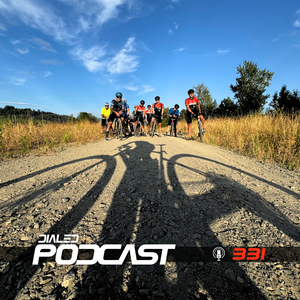
The Rundown: This week the guys are Jake von Duering, Lance Heppler and Ian Gibson, with Matt LeGrand away. They catch up on a Portland-area mountain bike short track series, a hot gravel ride, and the slow climb back to fitness. Leadout News covers the final stretch of the Tour de France, and the main topic is whether a bike fit is worth the money. They weigh the costs and the risks of buying parts on a guess, and explain when a fitter or a knowledgeable friend can save you pain and wasted dollars. Read on for the highlights, then hit play above for the full conversation.
Dialed Podcast 331 recap
The Backpedal: short track is back
Lance raced the Monday night mountain bike short track series again and said this week was cooler than the scorching opener, with a better start stretch that made the race spread out more. The guys talked about how much work the promoter put in, cutting a course through the trees, building berms and bridges over the slough, and hauling in loads of dirt. The venue sits on the grounds of Portland International Raceway but outside the track itself, so it avoids the long-running friction between cycling and the other users of the property.
The guys liked the big turnout of kids and juniors, and the fact that a six-race weeknight series exists again after years without one. They also wondered what could still be added, including more elevation, a voice on the PA, and better spots for spectators and team tents.
The Backpedal: rebuilding fitness, one long week at a time
Ian took a trip to the Oregon coast, where it was dramatically cooler than the heat back home, and rode his gravel bike on new terrain, which he said he needed to stay motivated. He also rode with friends over in Lyle, Washington. Another one of the guys is steadily building back up, with a ten-hour week under his belt, falling body weight, and better power and heart rate numbers. He talked about sticking to a plan and keeping easy rides truly easy.
The Tuesday night gravel ride in the heat had a new face who tore legs off in a few spots, and the guys said the group is getting stronger as the summer rolls on. Cyclocross season also got a quick mention, since the gravel ride had a few cross-style features like sand and downed trees.
Leadout News: the Tour de France final stretch
With three days left, the guys agreed that Pogačar looked close to unbeatable. They talked through the mountain stages still to come and the time trial on the final day. The real question in their minds was the fight for the other podium spots between Vingegaard and Evenepoel, and whether Vingegaard would defend or attack with so little left to gain.
They also marveled at how far the sport has come. Better bikes, aero kit, fueling, training science and race direction from the team car have all changed what riders can do. That led to a conversation about the sheer power numbers the top handful of riders can hold on big climbs, and how only a few riders in the race seem able to follow when the best decide to go.
Why a bike fit might be worth it
The main topic was whether bike fits earn their price. The guys said fits commonly run from around a hundred and fifty dollars to several hundred, and that the clearest upside is comfort, injury prevention and getting the key contact points right: saddle height and setback, cleats, saddle angle and the reach to the bars. Ian had positive experiences getting both his road and time trial bikes fitted, and he now marks his settings so he can recreate them after traveling or building a new bike.
They also pointed out that you can adapt to almost any position after enough hours, so it can feel normal even if it is inefficient or hard on your body. Having someone you trust look at you on the bike, whether a pro or an experienced friend, often catches things you can't feel yourself.
The cons: costly mistakes and uneven fitters
The downsides came up just as clearly. Cost is the obvious one, and the guys also warned about expensive mistakes after a fit, like swapping stems or cutting a steerer tube. Integrated cockpits can turn a small tweak into a very pricey one. The advice was to leave the steerer uncut and ride the new position for a few rides first, even if it looks ugly with a chimney of spacers.
They also noted that fitters vary a lot. Some have degrees or physical therapy backgrounds, and others learned from experience or the internet, and there is no single standard. Free help from experienced riders, YouTube, and low-cost fit apps can be a good starting point, especially if you are new to the sport.
Who benefits most, and what to watch for
The guys agreed that a time trial or triathlon bike is the case where a fit, or even a wind tunnel session, makes the most sense, since aerodynamics can be measured. For everyone else, a fit comes down to your situation, budget and how much you like to tinker. One of the guys has never had a fit and doesn't see how it would change much for him.
The takeaway was to treat pain as a signal. If your hands go numb, your knees hurt or you keep buying thicker tape and padded gloves, something is probably off with your fit. Riding should not hurt unless you are chasing a KOM or racing, so it is worth fixing the cause instead of patching the symptoms.
One Last Thing: burnout and crit season
For One Last Thing, Lance and Ian both talked about racing a criterium in the Portland area, with a masters criterium championship coming up in Bend. The guys also talked about what to do when your racing motivation fades late in the season: look for an event that fires you up, take a week or a month away from the bike, ride somewhere new, or ride with different people.
The podcast closed with a note about volunteer course prep ahead of a big weekend of races at Washougal, and the guys saying thanks to everyone who pitched in on a community fundraiser for a fellow rider.
Listen to the full podcast
This recap only scratches the surface. Hit play on the player above, or find Dialed Podcast 331 wherever you get your podcasts.
More Gear From This Podcast

Talk to the guys
Got a question or an idea for the show?
Ask us anything about the podcast, pitch a topic for a future episode, send general feedback, or ask about gear. We read every one.