

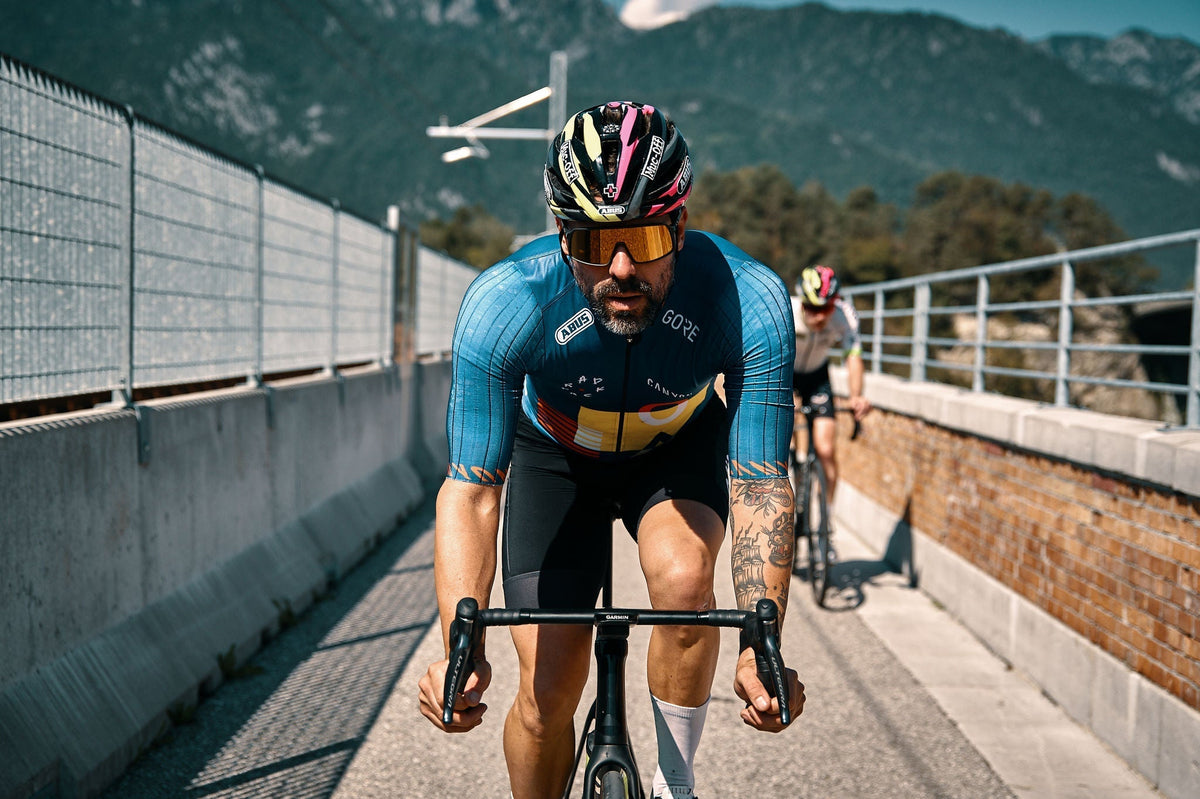
Should you run tubeless on your road bike?
Probably, if your rides take you over glass, thorns, chip seal or broken shoulders, and you will check your sealant every few months. Maybe not, if you ride short loops on clean dry pavement and the idea of sealant maintenance sounds like a chore. Tubeless on the road is a real upgrade for a lot of riders, but it is not a free one, and it is not for everyone.
We used to tell every road rider to switch, which was too strong, so this is the version we would actually stand behind.
What tubeless does on the road
Halfway through a ride the rear tire goes soft, you pull off onto a gravel shoulder, and then it is tire levers, a cold CO2 and a group trying not to look at their watches.
On a tubed tire, a thorn goes through the tire, then the tube, and the air leaves through the tube. On a tubeless tire there is no tube to puncture. The tire seals against the rim, and a layer of liquid sealant sits inside. When something pokes a small hole, the escaping air drags sealant into it, and the sealant plugs it from the inside.
Most of the time you never find out it happened until you see a small dried spot on the tire a week later and wonder when that was.
With tubeless sealant, the flat still happens, but you usually do not have to stop for it.That is the main reason to run tubeless on the road.
Lower pressure, and why that matters
The second benefit is less obvious. Tubed tires get pinch flats, where a hard hit squeezes the tube between the tire and the rim and cuts two little slits in it. That risk is a big part of why road riders pump their tires up so hard.
Take the tube out and that failure goes away. Zipp puts it plainly: no tubes means no pinch flats, which lets you run lower pressure for better cornering grip, better vibration damping and lower rolling resistance. Schwalbe makes the same case, that lower pressure increases the contact patch, which brings more comfort and more grip.
On a road bike that shows up on chip seal, rough patches and wet corners, where the tire can soak up more of the road instead of bouncing across it.
Where it falls short
These are the things we would want to know before switching.
Sealant dries outMuc-Off says its sealant lasts up to six months in temperate climates. Schwalbe says up to seven, and suggests topping up about 10 ml a month. If you let it go dry, the sealing stops.
Big cuts do not sealSchwalbe says its sealant is not meant for significant cuts or bursts. On the road, a sidewall slice or a big gash needs a plug, or a tube.
Some air loss is normalZipp says a 10 to 20 percent pressure drop overnight is normal for tubeless, so you will check pressure before every ride, which you should already be doing.
The install is the hard partRim, tape, valve, tire and sealant all have to work together. When a road tubeless tire will not seat or keeps weeping air, the cause is usually in that chain, not a bad tire.
None of these are deal breakers, because they are maintenance. The riders who get annoyed with tubeless are usually the ones who were not told about them up front.
What to carry on a road ride
- A tubeless plug kitA plug kit handles holes the sealant cannot close on its own. A Dynaplug Racer Pro or something like it lives in a jersey pocket.
- A spare tube anywayIf the plug does not hold or the sidewall is cut, pull the valve, put a tube in, and ride home, because tubeless does not mean you never carry one.
- A tire bootCarry one for a cut big enough that the tube would bulge through it.
- CO2 or a mini pumpA plugged tire still needs air to get you home.
What you need to switch
Every piece of the setup has to be tubeless ready:
- Tubeless ready rims, which most modern road wheels are, but check yours.
- Tubeless ready tires, like the Continental Grand Prix 5000 S TR or the 5000 All Season TR for wet months.
- Tubeless rim tape sized to your rim's inner width.
- Tubeless valves long enough for your rim depth.
- Sealant, measured for your tire size rather than poured by guess.
A kit like the Muc-Off Ultimate Tubeless Kit bundles the tape, valves and sealant in one box.
If you have run tubes for years and you get flats a few times a season, and you are curious why it happens, our post on why you keep getting flats covers the tire, road and riding habits that cause most of them.
Tubeless is worth it if your roads are rough or dirty and you will look after the sealant.
A good tube and a tough tire is fine if your roads are clean, your rides are short, and you would rather never think about it.
Choose tubeless or tubes based on how rough your roads are and how much upkeep you want.
Want it set up right the first time?
Tubeless conversions, sealant refreshes and tubeless tire installs are all paid bike services at the lab. Questions about going tubeless? Ask us.
See bike servicesThen check that sealant before spring.